Home > SOLUTIONS
In draft beer system operation, many dispensing failures develop gradually due to pressure imbalances or temperature fluctuations. Early warning signs are often overlooked without systematic maintenance. The following issues and approaches help clarify root causes, response strategies, and long-term prevention methods.

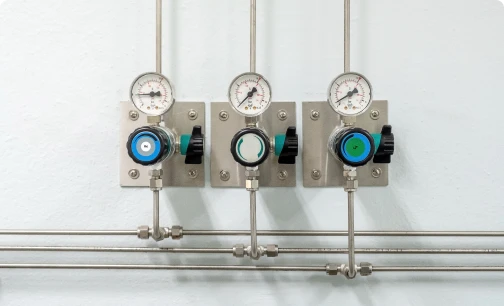
The Issue: The tap dispenses mostly foam, leading to severe product waste and slow service speeds. Solution Approach: Check the temperature first. Ensure the keg cooler and glycol chiller are maintaining a steady 34°F to 38°F, as warm beer expands rapidly. Next, verify the secondary gas regulator is not applying too much pressure (typically aim for 12-14 PSI for standard ales).

The Issue: The beer lacks a proper foam collar, tastes flat, and looks lifeless in the glass. Solution Approach: Flat beer occurs when the applied gas pressure is lower than the line resistance, causing CO2 to break out of the liquid. Check the CO2 tank volume and adjust the secondary regulator pressure upward to match the system's exact restriction requirements.

The Issue: The beer tastes buttery, sour, or metallic, and pours with a hazy, cloudy appearance. Solution Approach: This indicates severe bacterial growth, yeast buildup, or calcium oxalate (beer stone) inside the tubing and hardware. Implement a strict bi-weekly line cleaning schedule using an alkaline caustic cleaner, followed by a quarterly acid wash to dissolve hard mineral deposits.

The Issue: You hear a hissing sound inside the cooler, or beer is pooling around the top of the keg, draining your CO2 tanks prematurely. Solution Approach: Leaks almost always stem from degraded rubber gaskets. Inspect the keg coupler's internal O-rings and the bottom probe seal. Replace any flattened or brittle seals, and ensure the gas line hex nuts are tightened down with a proper spanner wrench.

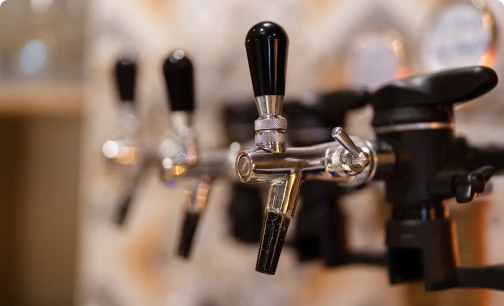
The Issue: The bartender tries to pull the tap handle, but the lever refuses to budge. Solution Approach: Dried beer sugars have cemented the internal sliding shaft to the brass or stainless steel faucet body. Never force the handle, or the lever will snap. Remove the faucet, soak the entire mechanism in warm water to dissolve the hardened sugars, and perform a standard brush cleaning.
The correct system depends almost entirely on the physical distance between your keg cooler and the draft tower. If your kegs are located directly underneath the bar or within 15 feet of the taps, a cost-effective air-cooled system is sufficient. For any distance exceeding 25 feet, a glycol-cooled trunk line is required to maintain a precise 38°F liquid temperature over a long distance and prevent the beer from turning into foam.
While our premium 304 stainless steel faucets and couplers are engineered for years of heavy commercial use, softer components require regular replacement. Vinyl product lines should be completely replaced every 12 to 18 months to prevent permanent flavor contamination and beer stone buildup. Additionally, internal rubber O-rings and keg coupler gaskets should be inspected quarterly and swapped out immediately if you detect pressure drops or leaks.
Yes. As a direct factory supplier, we offer extensive customization for commercial bar build-outs and brand-specific equipment. Our engineering team can manufacture draft towers to exact CAD specifications, configure custom faucet counts, and adapt dispensing hardware to match your venue's unique spatial constraints and aesthetic requirements.