Operating a high-volume taproom or restaurant requires a highly stable commercial draft beer system. Temperature control is the single most important factor in dispensing draft beer. If the beer temperature rises above 38°F, the carbon dioxide expands, forcing foam out of the faucet instead of liquid beer. This leads to wasted inventory and lost revenue. This technical solution covers the core cooling infrastructure and system configurations required to maintain exact temperatures from the keg to the draft tower.
Selecting the Right Cooling Infrastructure
Commercial draft beer systems generally fall into two categories: short-draw systems and long-draw systems. The distance between the keg storage and the dispensing point dictates which cooling technology you must install.
Commercial Kegerators and Short-Draw Systems
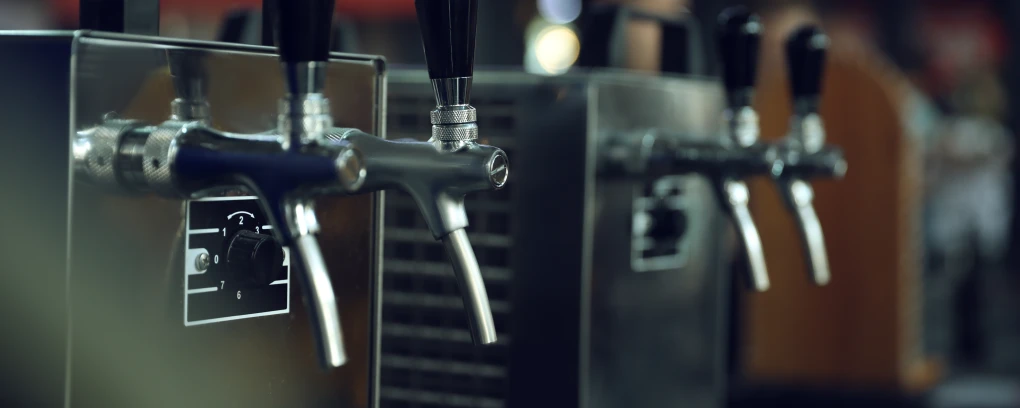
A short-draw system operates within a distance of fewer than 10 feet between the keg and the faucet. Most small to medium bars use commercial kegerators for this purpose. A commercial kegerator is a specialized refrigeration unit that stores multiple kegs directly below the dispensing tower. The draft tower mounts directly on top of the unit.
Kegerators offer a straight-out-of-the-box solution for casual setups and tight spaces. They force cold air from the refrigeration cabinet up into the draft tower using a blower fan. This air-cooling method works well for short distances but loses efficiency if lines extend beyond the immediate cabinet area.
Alternatively, a keezer is a chest freezer repurposed to store and dispense draft beer, often favored for extensive customization. However, keezers require a separate temperature controller to maintain the 34°F to 38°F serving temperature and demand physical modification to the lid to support draft towers. For commercial environments prioritizing streamlined operations and minimal maintenance, specialized commercial kegerators remain the standard recommendation.
Long-Draw Systems and Glycol Chillers
When your keg cooler sits in a back room or basement, and your dispensing towers are 20 to 100+ feet away at the main bar, you must use a long-draw system. Air cooling cannot maintain the temperature over this distance. Long-draw systems require a glycol chiller.
A glycol chiller is a dedicated refrigeration unit that pumps a chilled mixture of propylene glycol and water through insulated trunk lines. These trunk lines bundle the beer lines together with the glycol cooling lines. This continuous loop keeps the beer exactly at 34-38°F all the way to the tap, preventing foaming and waste over distances exceeding 25 feet.
Operators must fill the system with a specific glycol-water mix, typically 35-40% glycol. The chiller temperature should be set between 28°F and 32°F to counteract the ambient heat loss along the trunk line.
Glycol Chiller Sizing Matrix
Selecting the correct glycol chiller size depends on the total line length and the number of active faucets. Hotter ambient climates also require more cooling power. Refer to this standard sizing matrix for commercial installations:
| Number of Taps | Total Line Length | Recommended Glycol Chiller Size |
| 1-4 | Under 25 ft | 1/4 HP Chiller |
| 5-8 | 25-50 ft | 1/2 HP Chiller |
| 9-12 | 50-100 ft | 3/4 HP Chiller |
| 12+ | 100+ ft | 1.0+ HP Chiller |
Data based on standard industry equipment sizing guidelines.
Draft Tower Configuration
The draft tower holds the faucets above the bar surface. You must match the draft tower's cooling mechanism to your system type.
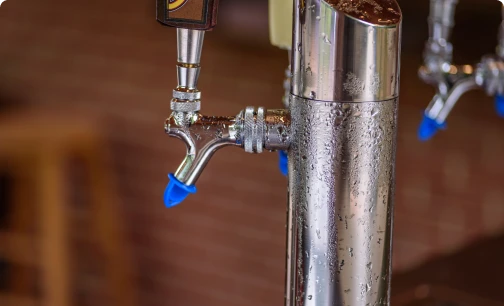
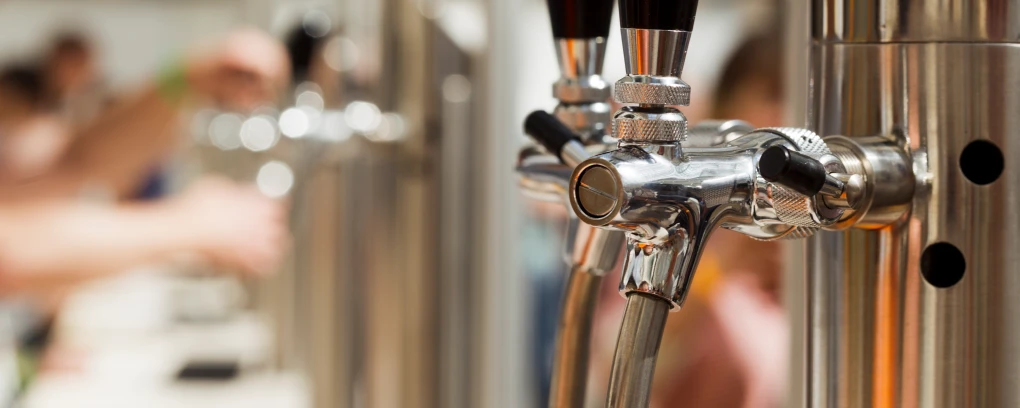
For short-draw systems, use air-cooled towers. These towers feature an open bottom that allows cold air from the kegerator to circulate upward. For long-draw setups, you must install glycol-cooled towers. Glycol-cooled towers feature internal copper blocks. The glycol loop runs directly through these blocks, chilling the metal shanks and the beer right up to the point of dispensing. High-quality stainless steel towers resist corrosion and help maintain beer flavor better than brass alternatives.
Solution Summary: How to set up a commercial draft system cooling loop
To configure a reliable commercial glycol cooling system, first calculate the distance from the walk-in cooler to the bar. Select a glycol chiller based on the total line length and faucet count (e.g., 1/2 HP for 50 feet). Bundle the product lines with the glycol supply and return lines inside a heavy-duty insulated trunk. Fill the chiller bath with a 35% propylene glycol to water ratio. Set the chiller thermostat to 28°F. Connect the glycol loop to the internal cooling blocks inside a stainless steel draft tower to ensure the beer remains at 38°F during dispensing.
Manufacturer Direct Supply
Our manufacturing facility produces high-grade commercial draft beer systems, including heavily insulated glycol chillers, air-cooled commercial kegerators, and custom stainless steel draft towers. We support standard configurations and custom OEM dimensions for bar build-outs. Contact our engineering team with your floor plan to receive a detailed system blueprint and equipment quote.

FAQ
How much does a commercial glycol chiller cost?
Entry-level chillers for small bars typically range from $800 to $1,500, while mid-range units for high-volume taprooms run between $1,500 and $4,000.
What temperature should a draft beer system be set at?
The beer inside the keg should be stored at 34°F to 38°F. To achieve this in a long-draw system, the glycol chiller itself is usually set to 28°F to 32°F.
Do I need a dedicated electrical circuit for my draft system?
Yes. Commercial kegerators and glycol chillers require reliable electrical connections. High-volume installations frequently need dedicated circuits to handle the compressor load without tripping breakers.
-

Written by
Frank WangFrank Wang is a technical content writer focused on industrial manufacturing and equipment applications. He works closely with engineers and project teams to translate real operating conditions, system logic, and product selection considerations into clear, practical content for B2B buyers, project managers, and technical decision-makers.