Pushing beer from a keg to a faucet requires highly controlled gas pressure. Incorrect gas management causes over-carbonation, flat beer, and highly erratic pouring speeds. This technical guide outlines the professional standards for selecting gas regulators, utilizing correct gas blends, and identifying proper keg couplers for commercial beverage programs.
Mastering Commercial Gas Regulators
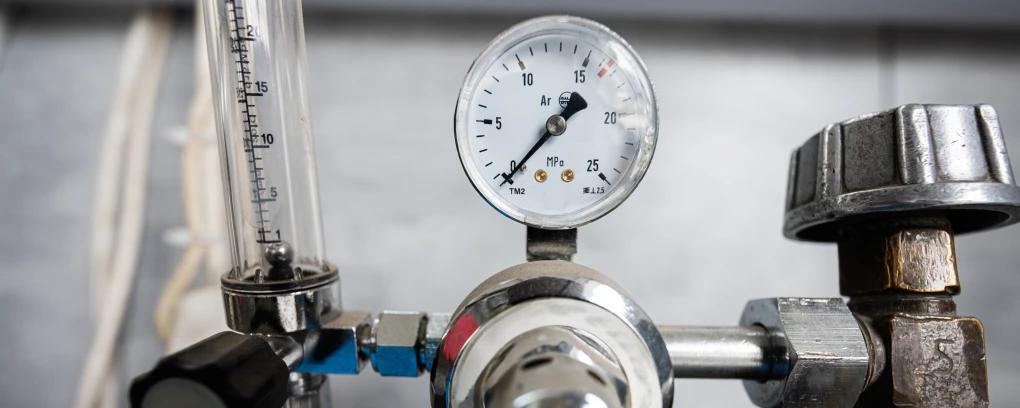
Draft systems use pressurized Carbon Dioxide (CO2) or a Nitrogen/CO2 blend to propel the beer. The gas enters the keg, pushes the liquid down, up through the spear, and out into the beer line. The device controlling this pressure is the gas regulator.
Primary vs. Secondary Regulators
A commercial draft system uses a two-tier regulation approach.
Primary Regulators: This unit attaches directly to the main CO2 or Nitrogen gas cylinder. It reduces the immense pressure inside the tank (often over 800 PSI) down to a manageable working pressure for the draft system.
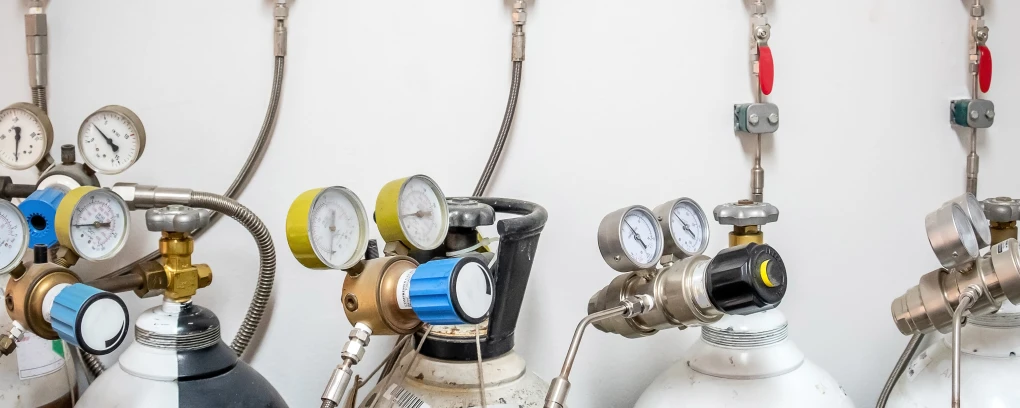
Secondary Regulators: These install downstream from the primary regulator, usually mounted on the wall inside the keg cooler. They do not connect to the main tank. Instead, they take the gas from the primary regulator and allow the operator to set individual pressures for each specific keg.
Different beer styles require different pressures. Stouts pour best at lower pressures, while highly carbonated wheat beers require higher pressures. Secondary regulators allow a single CO2 tank to supply multiple kegs at different pressure settings simultaneously.
To properly set up a regulator, attach it to the canister valve using an adjustable wrench, tightening the nut until snug to avoid damaging the internal gasket. Open the canister valve completely to prevent premature loss of CO2 pressure. Standard ales and lagers generally require the regulator shut-off valve to be adjusted until the gauge reads between 12 to 14 psi.
CO2 and Nitrogen Blending Basics
Standard ales and lagers rely on 100% CO2 to maintain their carbonation profile. However, long-draw systems often require pushing pressures exceeding 30 PSI to move the beer long distances. Exposing standard beer to 100% CO2 at 30 PSI will over-carbonate the liquid, ruining the product.
To solve this, commercial operators use gas blenders. A gas blender mixes CO2 with Nitrogen (N2). Nitrogen is largely insoluble in beer. By using a 70% Nitrogen / 30% CO2 blend, operators can apply the high pressure needed to push the beer over long distances without dissolving excess CO2 into the liquid.
Selecting the Correct Keg Couplers
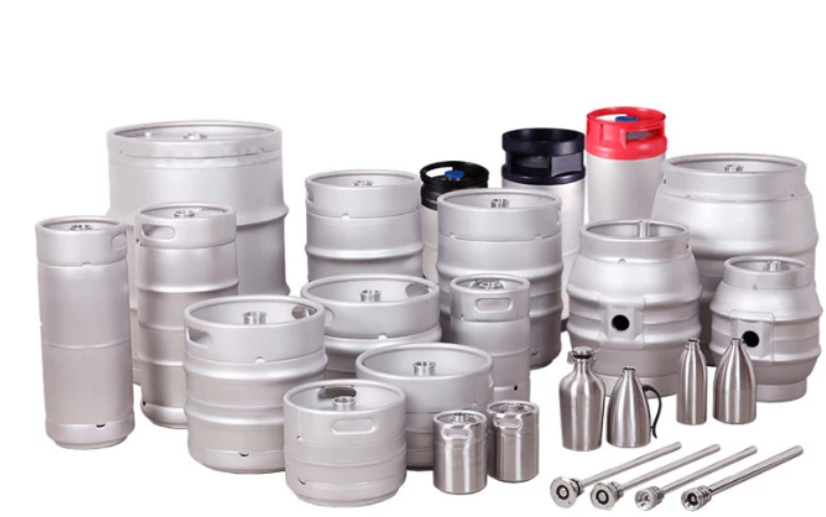
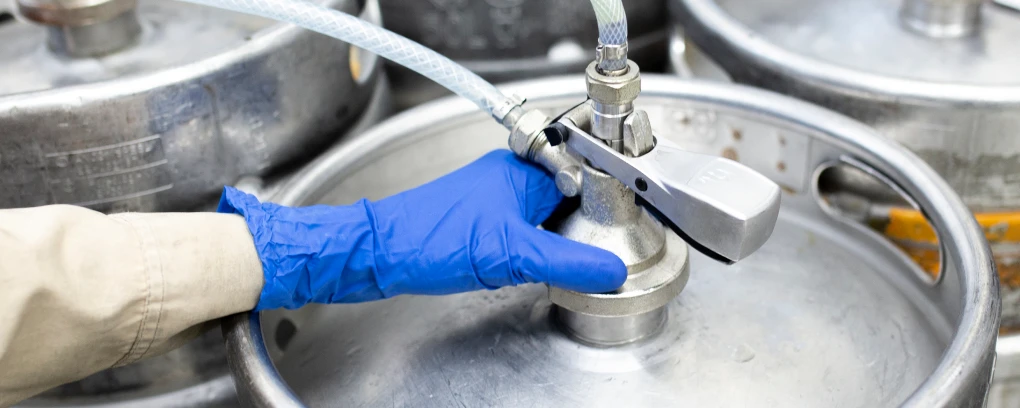
The keg coupler is the mechanical key that locks onto the top of the keg valve. It features two ports: one for the incoming gas line and one for the outgoing beer line. You cannot connect a keg to a draft system without the exact matching coupler. Couplers are categorized by letter systems.
D-System (American Sankey): The standard for the vast majority of North American domestic beers and craft brews.
S-System (European Sankey): Used for many European imports (e.g., Heineken, Stella Artois). The probe is slightly longer than the D-System.
U-System: Commonly used for Irish stouts and English ales (e.g., Guinness, Harp).
A-System (German Slider): Slides onto the keg valve rather than twisting. Used for many German brands.
Solution Summary: How to balance a commercial draft beer line
Line balancing ensures beer pours at exactly one gallon per minute with optimal foam. To balance a line, you must match the applied gas pressure to the line's total resistance. Calculate total resistance by adding the static resistance (gravity/height from keg to faucet) to the dynamic resistance (friction from the tubing). Standard 1/4-inch ID vinyl tubing provides roughly 0.85 pounds of restriction per foot. Set your secondary regulator pressure to exactly equal the total calculated resistance. If the gas pressure is higher than the resistance, the beer pours too fast and foams. If the pressure is lower, CO2 breaks out of the beer in the line, causing flat beer.
Commercial Gas Equipment Supply
We manufacture heavy-duty brass primary and secondary gas regulators, complete with high-visibility gauges and manual pressure relief valves. Our product line also includes 304-grade stainless steel keg couplers in D, S, U, and A systems, designed to withstand continuous commercial swapping without leaking. Contact us for bulk pricing on complete keg management hardware kits.
FAQ
What is the standard operating pressure for a draft beer system?
For most short-draw systems dispensing standard ales and lagers using 100% CO2, the secondary regulator gauge should read between 12 to 14 psi.
Why is my keg coupler leaking gas?
A leaking keg coupler usually results from worn rubber gaskets or O-rings. Over time, acidic beer and mechanical wear degrade these seals. Replacing the probe O-rings and the bottom seal promptly prevents gas loss and inconsistent pours.
Can I use a single gas blend for all my beers?
No. Stouts poured through restrictor plates typically require a 75% Nitrogen / 25% CO2 blend. Standard lagers on a long-draw system may require a 60% CO2 / 40% Nitrogen mix. Using stout gas on a standard lager will eventually cause the beer to go flat.
-

Written by
Frank WangFrank Wang is a technical content writer focused on industrial manufacturing and equipment applications. He works closely with engineers and project teams to translate real operating conditions, system logic, and product selection considerations into clear, practical content for B2B buyers, project managers, and technical decision-makers.